Category: Faith & Doubt


In Dickens’ A Christmas Carol, Scrooge asked the spirit, “… tell me if Tiny Tim will live.” The ghost indicated that should the shadows remain unaltered, he saw an empty seat. Eventually, the spirit used Scrooge’s own words against him, “If he is to die, he had better do it, and decrease the surplus population.” Interpretations tried to turn it into an assault on the wealthy, critiquing capitalism’s effect on society. It is not. Rather the spirit condemned Scrooge for the act of looking away, ignoring the evils imposed on people who cannot survive in society and also the political structure that keeps them in place. If I had to summarize God’s message to me, Dickens’ message would be an arrow between the eyes. 

These past weeks, I have been meditating upon my transition. In Dominoes, I noted Ms. K., waits. Why? In 2019 (see My Thanksgiving Letter), both God and she promised not to surrender, that they would always be knocking. I repeatedly told God I wanted to mentor people as if I could somehow drop from heaven and mysteriously help those in need. It’s as if I was saying, “Yeah, that’s it, God. I’m your man, your go-to guy. Bring it on. Let’s go.” I was on a roll until God provided a small portion of my end of life review.

An end of life review is a common aspect many Near Death Experience (NDE) claim to experience. It is sometimes described similar to a movie, in segments, or reliving every moment of life. During that process, there are no secrets, nowhere to hide. It’s all open. Suddenly, my meditation was no longer an exchange. God began to speak.

He told me that running the universe is above my pay grade. “You want to be a mentor? Then when did you mentor the needy in life?” Showing just a few clips of those I’ve ignorantly hurt or dismissed, God continued, “Who are you to request your position? What makes you so right? Why do you ask for something to be in heaven that you willfully failed in life? What effort did you give? What passion did you expend? Where are your fruits?” God claimed that the same passion that resides in us, the spark of the divine, the image of God that we bear, is what also allows us the free will to do good or evil, to choose to harm or either ignore willfully. 

It was a lovingly rebuke during a moment of arrogance. There were many moments where I failed to mentor. Let’s face it. I am not perfect. I was presumptuous to think I could ask God for what I thought I would like to do, but I was honored by God’s honest questioning. Terminally ill or not, I shouldn’t have overstepped. As written, “If you want to be first, you must be the very last. You must be the servant of everyone.”

What Jesus told His disciples is the same lesson God had for me: I needed to be a servant. A servant does things for other people before themselves. When someone is a servant, they put themselves last. As mentioned before (Deciphering God’s Call), Ken Boa stated God entrusted us with specific resources, gifts, and abilities. Our responsibility is to live by that trust by managing these things well, by design and desire. For a good portion of my time on earth, I the very gifts God entrusted me. Seeing my own arrogance, I sheepishly requested to be the caretaker [janitor] of a small park. “No. Taken.” Angel of gum removal? “Taken,” He interjected. “I have something else in mind.” He left without indicating what that ‘something else’ would be. Whatever it is, it will be His will, not mine.

Former world heavyweight boxing champ, Muhammad Ali, was known for often bragging, “I’m the greatest.” Just before take-off on an airline flight, the stewardess reminded Ali to fasten his seatbelt. “Superman don’t need no seatbelt,” Ali said. The stewardess retorted, “Superman don’t need no airplane, either.” Ali fastened his seatbelt. Likewise, I fastened mine.

A Walk Alone

Some claim solitude leaves me to wander both through and beyond a dark foreign land (death). There’s no one single road, nor is there a map showing the way. Yet, if I can pass through, will I not find peace? Maybe my answer is not physical, but the very nature of why God called me to trust. Of course, there are steps, His and mine. And therein I find spirit of life walks with me. We walk together. And until I am ‘called,’  the world moves.

Given the fact a major stroke awaits at any moment, life propels onward ‒ there is work my employer requires, conference calls, deadlines, and debts to be paid. Life goes on regardless of how much of Thanksgiving week was spent lying in bed, hobbled by hip pain beginning Monday, November 23rd. Since I had no fall, no bruising, no trauma, and based upon symptoms, osteoarthritis is the likely culprit. The right hip, yeah the one which had only inconveniently plagued me until now, decided to perform a full-on assault. Every movement was either a dull ache or produced noticeable suffering. Walking required further leverage of a cane, and sitting was ‒ as I would simply put ‒ a bitch.

A friend might say to a doctor, “He won’t tell you this, but he is suffering.” Truth be told, the past few days had been an assortment of pain. However, no such friend knows the burden. I ate even as Advil and Tylenol percolated throughout my bloodstream.  Like almost all parts of this journey, I was alone when I read recent medical results. I sat alone in my favorite recliner while medication turned upside down every 6-8 hours. As terrifying as it is, it is a solitary journey. At a very gut level ‒ the soul ‒ it’s what I’ve come to embrace. 

There’s some portion of every soul for which the journey must be alone.  Sure, there are parents, lovers, friends, lovers, coworkers and others who can, and often will, assist, but there’s an integral part that is solely our own. No matter how much I would like to have a friend who could support me, there’s no possible way to transfer the pain. It is my ‘cross,’ mine and mine alone.

Supposedly the Buddha said, “If for company you cannot find a wise and prudent friend who leads a good life, then, like a king who leaves behind a conquered kingdom, or like a lone elephant in the elephant forest, you should go your way alone. Better it is to live alone; there is no fellowship with a fool. Live alone and do no evil; be carefree like an elephant in the elephant forest.” I think I understand the reason for the advice.  

People who are on a path of spiritual growth learn not everyone is on the same path. Even though we are all, essentially on the same journey (see Falling Through the Cracks, where 90% will pass from one of six diseases), it’s important to choose what we allow into our minds.  The Buddha basically says to try and associate with “wise and prudent” people, but don’t get lost following a crowd, just because you want some affiliation. Real spirituality is not a social practice; most of the time, it is a private endeavor between God and you. It’s an individual matter. I was tagged as being monolithic, an impersonal, sometimes non-political, structure that is invisible, yet indivisible. True, but not quite.

I am privy to all the thoughts and feelings I tend to hide from the world. My journey is personal, deeply personal. I am continually looking for transcendence, but I am also hoping we can look past indifference to one another. To some extent, God choosing to dwell where least likely to be looked (within the depths of my soul) is genius. And maybe, just maybe, by the time I meet God and Ms. K., I will be fully awake and the soul will fully comprehend.

Master: You see only what the eye sees. What the soul sees cannot be denied.

Student: Will not the soul, too, be denied in death?

Master: No. The soul always sees.

Student: Yet the body dies.

Master: Does the sun die?

Student: It does not shine at night.

Master: It shines somewhere. You just cannot see it.

My trek through this disease reminds me of Vinko Bogataj. On March 7, 1970, A Wide World of Sports captured Bogataj’s third jump on the Heini Klopfer hill. Midway down Bogataj realized the ramp had become too fast. Attempting to lower his center of gravity and stop, he lost his balance, flew out of control, tumbled multiple times and crashed through a retaining fence before halting. Coordinating producer Dennis Lewin inserted Bogataj’s crash to coincide exactly with the words ‘… and the agony of defeat.’ (You can see the clip on YouTube’s Wide World of Sports intro, about the 13 second mark.) Life is filled with the cyclical nature of ‘the thrill of victory’ and ‘the agony of defeat.’ As you walk, almost everyone understands this yin and yang.

Everyone continually proceeds through the cyclic process of suffering and recovering from defeat.  At face value, 2020 seems loaded with fear, anxiety, and other hatred. And unlike the Stella Artois ‘Daydream’ commercial (which admittedly, I’ve personally viewed over 60+ times) the path remains uncertain. The journey is daunting.  You smile, restate a Psalm, Bible verse, famous quote, wear your charm, spew positive thoughts (because that’s what’s expected), but inside, 2020’s tastes like f’ing vomit.  I sometimes think everyone else is somehow favored, for they are free from my 30 years of pain. They are free of a death sentence that beckons at a moment’s notice. They are free from everything being ‘the last.’ 

I understand the felon’s torture. This morning would be the last cup of tea, the last good night’s sleep, the last great shower, the last great meal, the last great smile, the last thought, the last despair, and the last snippet of hope. Eventually, we crash. Life ends. And our last reach unto heaven remains inconclusive. “Do you think he made it into God’s hands?” “Unsure,” mumbles another. The notion that some find grace and beauty in every fall is a matter of perspective.  

No one ever knew me as someone who knew how to fall, but like Bogataj, I got up every time.  I also realized laughter saved many a day. Why? Because it can save the day. There’s a great deal of evidence that laughing improves both mental and physical health. Getting fired in 2010 was a horrific experience. After nearly six (6) weeks self-flagellation, I started to laugh. Captain Gerald Coffee was a POW for seven years during the Vietnam War. He claims he and the other American soldiers he was imprisoned with found solace in laughter, and it helped them make it through the harrowing experience.

I began laughing at my experience, the ridiculousness of taking one medical test after another with little hope of ever detecting that ‘fatal blood clot’ lying in wait to claim my life. Life’s absurdity, and all that could go wrong, deserve a laugh. A medical clinician recommended I eat a healthier diet. “You’ll be healthier,” she stated. Catching her error, “Oh. Sorry.” We busted out laughing. Comedian Demetri Martin once said, “The worst time to have a heart attack is during a game of charades, especially if your teammates are bad guessers.” Fortunately, I hope I’m not one of those who can be improved only via death. Therefore, I embrace the notion that laughter allows joy to flow into an otherwise joyless situation and forces fear out.  And with joy comes gratitude and love and hope. 

I simply let go of fear. Sure I think of death. Quite a lot in fact. I don’t fill my life with repetitive rehashing of what-might-have-been. I figure God will justifiably judge my arse in due time. I have to rejoice in what is, a simple cup of coffee, in friendships and love. I reach for hope, laughter of the soul, and unknowingly, even the most mirthless of situations can become sunnier.

I know it’s hard to find laughter and joy during fearful and self-doubting moments. Kobe Bryant once said, “I have self-doubt. I have insecurity. I have fear of failure. I have nights when I show up at the arena and I’m like, ‘My back hurts, my feet hurt, my knees hurt. I don’t have it. I just want to chill.’ We all have self-doubt. You don’t deny it, but you also don’t capitulate to it. You embrace it.”

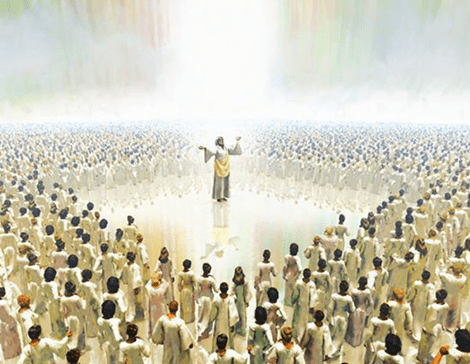
Thus, my end life journey continually searches for the man (God) who will profoundly affect my life. He will probably review my life, painfully cry at some moments, and laugh at the most absurd failures. And from those moments within ‘the agony of defeat,’ God will embrace ‘the thrill of victory.’ In that moment, I shall no longer recognize the person from years past, for I will become anew. And looking behind me, I will see thousands of others just like me.

Thanksgiving 2020

If God were here, He’d tell you I failed to alter the course of human history. Pretty miserably in fact. Like many, I tended to be swept along by Tsunami-like waves of current events, often set in motion by something entirely beyond my control. I survived the years drifting alone and repeatedly tortured myself for the years wasted bobbing at sea waiting for either a rescuer or to be eaten. For fellow bobbies, the year 2020 required an incredible amount of internal fortitude. We made it past COVID, unemployment, hunger, Trump, the election, peril and or death. Now we’re here, November 26th. Congratulations! And since Thanksgiving is upon me, I ask myself, “Do I celebrate, memorialize, or a little of both?”

Ms. K. died seven years ago, just prior to Thanksgiving. I never knew she passed until early 2014. And why should I have known? She was a fellow colleague that I’d meet for lunch, catch-up, shake hands, and say, “Same time next year.” Now, seven years have passed. And since she was from Japan, I wonder if her family would participate in the Obon festival, an annual event for commemorating one’s ancestors. 

According to Buddhist legend, Obon originated from a disciple who used supernatural powers to see his deceased mother had fallen into the Realm of Hungry Ghosts and suffered greatly. The disciple went to Buddha and asked how he could release his mother. Buddha instructed to make offerings to the many monks completing their summer retreat (occurring on the fifteenth day of the seventh month). The disciple did as instructed and his mother was released. I am not sure whether the Japanese version has similar intentions or not. I liken Japan’s version of a festival to honor the dead. 

Obon can be held during the 1st year anniversary, sometimes in the 3rd and or the 5th, 7th and 13th years, and a number of times afterwards up to either the 39th or the 50th year, and that each time, ancestral spirits return to visit relatives.  Remembering from my days in Japan, it is not a solemn event. Dances are performed, ‘ozen’ (offerings) are placed in front of altars, temples, and sometimes grave sites. Many families visit grave sites and clean gravestones. Paper lanterns are hung round to help guide the spirits return. Some families carry lanterns from the graves back to their homes. Toro nagashi (Floating lanterns) have sometimes been set afloat downriver, running to the sea. Symbolically this sends their ancestors’ spirits into the sky. 

The thread between all these stories is to understand how past selflessness and the sacrifices were made. In life, I never knew Ms. K., but she has since visited and I believe she remains a guide during my travels here. As much as I’ve tried to research, I know nothing Ms. K. ‒ not where she went to college or how many siblings her family has, what she did for a living prior to settling in the United States or other minutiae of snippets that surround typical friendships. Yet, by the very nature of my illness, I deeply understand the personal impact of pain, despair, constipation, the trudge of earning a living while dying, pondering the future ahead, and finding hope. If anything, I would say each of us must embrace any friendship founded in hope. 

For many families, Thanksgiving and Christmas will be filled with music, small parties (if any), a Netflix movie, family and friends via Facebook, Facetime, or Skype. Others will look upon the empty chair and dabble at tears. My heart aches for Mothers like the Duchess of Sussex, who ‘clutched her firstborn while losing the second.’ I cannot imagine the pain. 2020 saw so many heroes lost, including clinicians, fireman, police officers, teachers and activists. Jess Wells lost her husband (an Egyptian activist) to a dictator. Activist Travis Nagdy was shot and killed by a carjacker. Still, I feel a sense of optimism. I remain grateful for the kindness and sacrifices of all those who sleep. We should remember and appreciate each person not not as though they were perfect, but rather the positivity brought to life. 

As trite as it may sound, I will embrace hope this Thanksgiving, for it is a powerful force that propels us through fear, depression and paralysis. Hope is unlike any other medicine. It kept me going throughout the years. I will retain my faith in both God and Ms. K. In 1978, God told me He would always watch over me, and personally know He intervened when He neither really had too nor probably wanted. I presume He did so for two reasons. First, He promised. Second, He cared. As for me, I don’t get up and work in spite of the pain because God was committed to me. I did it simply by the fact that since I awoke in the morning, that I should get up, be productive, and in some small way, help another. It’s what God would have wanted. I think that’s the way Ms. K. would want me to honor. 

Ms. K. didn’t require a chochin lantern to call her spirit nor did she require one to return. (Heck, I don’t even know where she’s buried.) However, I know she is in my heart, and that’s a toro nagashi (floating lantern) that will never burn out. Therein lay my Thanksgiving message, never let hope (love) burn out. It is all we have.

Happy Thanksgiving everyone. Happy Thanksgiving Ms. K. Feel free to stop by. 

Is it possible for God to look upon human frailty and feel compassion? Some days I wonder. I wonder if He remembers what it’s like to walk the earth, see the pain, look upon the hunger, go back to heaven and ask what’s for dinner. Meatloaf? “Great.” Wine from a heavenly vineyard? “Awesome.” Regardless of what God thinks, I am exhausted. Simply, going to the doctor for a blood draw or through a supermarket feels like a gargantuan task. I no longer walk, I shuffle. Rigidity and sagging stomach drooling over my belt graces anyone who dares to stare. Doing any more than two tasks at the same time is challenging. Back in the safety of my car, I lay against the headrest and thought of the previous week. I completed the task at hand—preparing for inevitability.

I spent this past week saying goodbye. Sure, I should have started this shortly after receiving a terminal diagnosis nearly two years ago. Remember? The days when I could still leap from a couch, hold a coffee cup, a plate with a bagel while simultaneously carrying on a conversation via Bluetooth headset. “Death? What death?” I sometimes smirked. “Dude, that’s like a couple years away,” a defiant inner voice responded. Continuing, “A lot of things could happen between then and now. Miracles could occur. And I could be one of them.” I wasn’t.

If you’ve read my blog, you’ve known I never believed in miracles from some Devine interceder were meant for me. I pretty much accepted my fate, even now. I just knew that whatever time I had left, it could be the last time to experience. Flying to see my mother and father, flying to see my brother, that beach walk on the Florida Panhandle, the desert sky, and that walk with Skip, my father’s dog. Just as my doctors said, I always knew I could be within weeks, days or hours of death. The October 19th event brought clarity. 

For the 60 years of life, my family consisted of four: my father, mother, brother, and I. We grew up, went on to extend our inner circle, but at its core, there were just us four. 2021 brings a future of absences, absences that will weave through the family core as my father and I are likely to depart. My parents will never have another child and my brother will never have another brother.  I looked at 60 years of documents spread across the Livingroom floor, deciding what to send, what to trash, what to donate. Yesterday, my life finished with 499 pieces of documents stuffed into a folder that will be distributed when I’m near death or dead. 

Even in death, my will will continue on earth, at least for a brief moment. There will be bills to be paid, assets to transfer, assets to sell, writings to be mused of, and potential awakenings with “What the hell possessed him to do that?” When people look at this material, I hope the world knows I approached my finality with clarity, that decisions were made from a position of reason, intellect, compassion, honesty and love. Looking through the pictures and documents, I notice how feelings are difficult to discover—and often even more difficult to acknowledge. Yet hidden in the deepest feeling is a higher truth. Many will find a sense that finally that “f***ing bastard is gone.” Even in anger, it was my goal for love to live and survive.

Sure, I’ve seen the same basic instincts in others facing death. An eighty-year old nun who talked about God’s penchant for miracles as a cough settled in; died two days later from COVID. Then a close friend, an Emergency Room Chaplin, who feared no such thing a COVID because she always took precautions, wrote via email to update us on her struggle to breathe after COVID diagnosis. In truth, I am not that desperate to stay alive.  

While I did have a blood draw this morning, I didn’t need the test to tell me if a treatment is working.  I can feel life’s edge.  The climax closes quickly and inherently, I have an internal knowing I will stop soon.  As such, I can feel for those who will unwillingly envision a life without me. My heart aches but I don’t know how to help. As I finished sorting my life, I accepted that there’s a part of the preplanning process that cannot be resolved. One can resolve logistical problems of death, but how does one alleviate pain? My mother will suffer. And maybe for a fleeting moment, my brother will as well. Nothing I say or do will help as much as time. The laws of planetary evolution don’t allow one to relive dreams. To those who hurt, time will be your friend. It will remove the intensity of the hottest of rage and, yes, even the most heartbreaking sorrow. It will heal you. And you will become free to live again.

Two Fathers & Better Angels

A ventilator can mean the difference between life and death for seriously ill patients. But sometimes even these ventilators cannot save someone’s life. I looked at the age Mr. Smith had progressed through his short three-week stay at our hospital: a non-active otherwise healthy 86 year old, to mini-stroke, to heart attack, and now near death. Through the multiple layers of protective gear, I stroked the thin aging hair. His eyes remained shut but somehow I felt some connection. 

Medical teams face tough decisions about when to stop treatment. The decision is made after careful consideration, analyzing factors including age, underlying health, response, and ability to recover. With our hospital at 94% capacity of COVID, I volunteered to assist the attending physician Dr. Nessie (also a sister/nun). Our presence ensured Mr. Smith would not pass alone. 

Restrictions meant this man would die without family. Dr. Nessie used an iPad, assured the family their father was not in pain, looked very comfortable, and asked about her Mr. Smith’s wishes and religious needs.” The curtains were closed, we turned off all the alarms, watched the heart rate monitor hit zero, and just like that, flat line (death). 

After processing, Dr. Nessie asked, “Normally, I don’t get volunteers. Why today?” 

“I felt I needed to give back. I couldn’t be there when my father passed away. I am trying to give someone what I couldn’t.”

“I am so sorry for your loss.” Dr. Nessie continued, “When did he pass?”

Glancing at my watch, “About two-hours and forty-three minutes ago.”

My father passed away 1,400 miles away several weeks past his 89th birthday. “F*** it. I am tired of this s***,” he reasoned and left. Now he’s just another CNN/MSNBC statistic. 

Nearly 20 years ago, my father had an Near Death Experience (NDE). During his time in a coma, he claimed God sends two types of angels: ‘takers’ and ‘helpers.’ “Takers’ help the newly deceased to heaven. ‘Helpers’ assist people in moments of crisis, such as heart attacks, car accidents, and other calamities. In the years following his NDE, we’d walk during late summer evenings and discuss how no one actually dies alone, that there is always an angel(s) present even if one can’t see them.

Personally, I sensed no such presence in either death. One cannot detect the extraordinary via an iPad. Yet, I hope both Mr. Smith and my father experienced God’s loving angels, who cared for them in their hour of need; that each of them saw the extraordinary in the ordinary; that each were embraced by Chrrist’s love. 

If today’s election and deaths must be connected, may we find hope in Abraham Lincoln’s words. “The mystic chords of memory, stretching from every battlefield and patriot grave to every living heart and hearthstone all over this broad land, will yet swell the chorus of the Union, when again touched, as surely they will be, by the better angels of our nature.”

Question. If you were told you are going to die in three months, what would you do? That’s a similar message I received twenty months ago. The March 2019 prognosis went something like this, “Subsequent diagnosis indicated cerebrovascular disease .. with proper medicine and dietary changes, maybe minutes, hours, days, weeks, months or a couple of years.” I’ve been living in minutes, hours, days, weeks, months, and years since. In clinical terms, I met expectations, with some physicians claiming I even exceeded expectations. Tuesday, that “progress” was updated. ‘Years’ was removed. The subsequent redefinition becomes more impactful when life gets reduced to “minutes, hours, days, weeks, or months.”

Those in the medical profession (like me) talk about that one moment when a dying person first comprehends, on a gut level, that death is close. Nessa Coyle summarized that the habit of allowing thoughts of death to remain in the background suddenly becomes impossible when it can no longer be denied. Instantaneously, death is in your face.

Intellectually, I’ve had a long time to accept being terminal. And throughout the past twenty-months, I tirelessly treated (for lack of a better word at the moment) the physical, psychological, social, and spiritual domains of my soul. Even now, I feel neither feel depression nor anger. I am more horrified by death’s methodology than the literal act of dying. Monday morning’s episode revealed that the process of dying (for me) would either be long or swift. I fear the lengthy.

Clearly, I inherited my father’s computer wiring (brain schematic). For years he seemingly suffered endlessly with Transient Ischemic Attacks (TIA, a fancy name for short-term strokes) that arrive at night and leave by daybreak. Until it didn’t. Five years later, my father entered Hospice (a month ago). His demise has been slow, painful, and completely compromising, not only for me but also for my mother, who lived day and night by my father’s principal caretaker. 

My TIA arrived like a freight train after midnight and departed before dawn. Similar to early 2019, this was another warning shot, only bigger. It was a massive detonation. Sure I survived, but I was assured Mr. TIA would reappear and probably won’t leave. Doctors experts ran the statistics. About 1 in 3 (some studies claim 1 in 5) who experience a TIA are likely to experience a stroke within six months. The odds of experiencing this within 90 days are 2%-17%. My thought after being told I was going to die in months? In the immortal words of Burn Notice character Michael Weston, my physicians were saying, “Don’t make retirement plans.”

One fortunate outcome (thus far) is that I’ve never lost control of who I was. This is an essential point for all facing death (or will face death). I may have lost control of the body, but I never lost control of me. Even during Monday’s TIA, I understood who I was, from where I came, the day, date, time, the problems facing me, the problematic discussion about whether one would find me with an unclean butt. Therefore, I hope that no matter how far I progress through this process, I believe there will be some part of me that will exist. It is a part I can knowingly take with me into the future to whatever lay beyond. 

As stated in many spiritual teachings, helping another die with a peaceful, positive state of mind is one of the most extraordinary acts of kindness we can offer. I think that should be everyone’s focus. Indeed, this will not be easy. Just the physical aspect of dying will be challenging. My goal is to be treated with respect, kindness, and love; to talk and be listened to; or, at certain times, to be left alone and in silence. People like me have spiritual needs – to make sense of life, their suffering, their death, have hope for what lies beyond, feel that they will be cared for and guided by someone or something wiser and more powerful than themselves. I am fortunate, for I believe someone awaits me and will provide guidance. 

After the doctors guided me through their updated prognosis, I momentarily reflected upon a recent Zoom business seminar. A seminar leader asked the roundtable of healthcare leaders what they had learned thus far through the pandemic. Most provided rather mundane versions of being a better spouse, parent, friend, or mentor. One person silenced the room. “I learned to humanize people and how not to be afraid of others, for everyone has value. It is a privilege to be a part of — even a small part of their life. And it’s a privilege to help them move on to wherever is beyond [death]. All of you inspired me to do that.”

And that’s been my goal. Hopefully, that’s what this blog has been about. May each of you be the part that helps people to move beyond. When things seem dark, find the power of love in those who surround you.

If you want to verify how clean hardwood floors are, spend a couple of hours face down sliding your face over each board. It is a cleaning tip I have neither known nor read. It certainly wasn’t on the front page of Good Housekeeping, on the back of a Mr. Clean bottle, or seen on YouTube. Nonetheless, there I was at 2:00 AM early Monday: rubbing my face across my hardwood floors because I could neither sit, stand nor crawl. I rolled over in bed and something went ‘bink.’ Maybe it was a ‘bink.’ Sounded like a ‘bink.’ Then again, it could have been a ‘boink,’ or possibly a ‘dink.’ I cannot accurately describe the internal sound. Doesn’t matter. What I tell you is the subsequent several hours trying to find a way to simply exist. 

I have lived this past couple of years believing I could have gotten lucky. Death would simply fail to notice me. We all do. And for the past couple of months, for the most part, I started thinking about two years plus 1. Then, out of nowhere, ‘bink.’ Sudden onset of severe & constant dizziness, nausea and vomiting, and imbalance. Did not matter if I stood (which I could not) or sat (which I could, only by leaning against a wall). Therefore on a cool crisp night, I lay face down on the hardwood floor. Struggling to coordinate a response, I realized a few critical points that impeded my ability to do anything but ride it out.

Both my overpriced iPhone 12 Pro Max and fancy-dancy Apple iWatch 4 were in the other room. My telephone? You guessed it: in the other room. If you read my blog, you’re probably asking, “Why did you do that?” My response is similar to that of my cat Cougar after being caught climbing the Christmas tree. “Cougar! Why did you do that?” He sheepishly shrugged, “I don’t know.” That’s one of the tricks to fancy-schmancy technology, it is all absolutely of no value when face down on the floor at 2:20 AM in the morning. Siri can’t hear. Mr. Google is asleep. Amazon is off. It’s just you and your thoughts. 

Believe it or not, my first pressing question was “How will I take a dump?” Second question.”I manage to sit on the toilet, can I wipe?” Agreed. These are not life and death questions, but at 2:50 AM, they seemed important. Ok. Important to me. Of course, I should have been trying to figure a way out of this mess. I should have been deciding how to call paramedics, a friend, or a neighbor but the thought of an unwiped behind permeated my thoughts. No. Thought of the Angel of Death finding me with an unwiped behind never occurred to me. It was just thought of an old, bald, fat man lying dead with an unwiped behind. 

“What we have?” asks the corner.

First officer, “An old, bald, fat dude with an unwiped a**.”

“Geez. Third time this week.”

“Yup,” nods the second officer.

As you know, I made it out alive. My doctor reminded me that I am, in fact, dying. Just not today. She also stated March 2021 is just around the corner, that I should expect more problems when nearing the point of no return. Five months is not that far away. Deep down, I know my body is getting worse. I may refuse to show it, but I feel it.

As a spiritual person, a Buddhist, for these 8 years or so, I know the time of death is uncertain but the truth of death is not. I take hope in knowing that everything is intertwined and linked. Like all things, we are constantly changing and regrouping. This means that transitoriness and change are basic features of spiritual life. The same applies to the human body: it too is constantly changing. And even laying on a cool hardwood flow, openly ready to vomit, my body teaches impermanence.

It is a fundamental error to think of one existing separate from others. The fact that I have a human body is considered a rare privilege. I am unsure what I did in some previous life to earn that privilege, even with the understanding I have not nourished it properly for a decade. I disown neither it nor God. I am not my body, but rather I am an inhabitant. I am the renter. I am sorry for the pain I caused my lessor, but I am proud it served me, even unto the end.

Kamma! It Just Is.

I’ve been off radar recovering from ongoing medical conditions. A week ago, one of my eyes decided that going on the fritz was imperative, and for whatever reason, vision blurred. Being the alpha male of my home (Ok, the only male in said home), I decided it was nothing — that the visual part of my anatomy awoke to have a bad morning. Indeed, once I drop coffee down my throat, all will be well, sharp just like the night before. It turns out the alpha male of the home was completely wrong.

There is backdrop. February 2018, I woke up with primary open-angle glaucoma (POAG) — called open-angle glaucoma — which is the most common type of glaucoma. Open-angle glaucoma is particularly dangerous because those who have it don’t know anything is wrong until significant, irreparable vision loss occurs. Until all hell broke loose, I had no pain, no noticeable vision loss, or any other hint that something is amiss. Yet the “silent thief of sight” struck. Four eye surgeries later, I was a new man. “Go forth and procreate,” clinicians said. (I was told everything was ok.) Until this week.

“Ocular hypotony is usually defined as intraocular pressure (IOP) of 5–6 mmHg or less.” The doctor said. “So, instead of having too much pressure, you’re experiencing too little pressure. Also, the cornea in your eye looks like sandpaper. That’s why you’re experiencing blurred vision. The problem is, we don’t know why you’re experiencing low eye pressure. Every test we’ve performed is normal.” For the time being, blurred vision is my life, and the forecast reads like a weather forecast: partly cloudy to rainy.

Simultaneously, I’ve been listening to the news. Depending upon whom one hears, President Trump is either near post-COVID treatment and is ready to leave, requiring oxygen, has a long road to recovery, or has no clear path to recovery. Trump and I are alike in many ways. Both of us probably have “no clear path to recovery.” Each of us has received medical treatment not afforded to the average person living their life on Mainstreet, U.S.A. Trump received medication that neither you nor I will ever receive. Yet, both of us have avenues to better healthcare than most.

I have known for nineteen (19) months that time is short. Specifically, my time is short. Maybe Trump and I are on a similar path, just different roads. I also affirm that this present life is only a part of the round of existence (samsara). This current life I am experiencing was conditioned by others who influenced me. In turn, my next existence will allow me to learn lessons in this life.

In COVID, there are usually some people who succumb while others escape, even though both are exposed to similar conditions. According to the Buddhist view, the difference between the former and the latter is inherited from the past. Other examples are the cases where though the treatment was given was successful, and the patient died, and wherein spite of ineffective treatment, the patient lived. There have also been cases of remarkable and unexpected recoveries when modern medicine has given up all hope for remission. Such cases strengthen the Buddhist belief that besides the physical cause of disease, illness can be the effect of lousy Kamma in past lives. An infection from Kammic cause cannot be cured until that Kammic result is exhausted. But the Kamma of every person is a mystery both to himself and others.

In reality, all of us know suffering is an inevitable part of life. Like old age and death, sickness is unavoidable. In other words, in this life, “it just is.” This does not mean that I will mitigate every ache and pain through available medical means, but I will accept and mindfully endure if suffering remains. Within the spiritual tradition, physical pain and illness can provide an occasion for the cultivation of healthy and desirable mental states, including forbearance and patience. Therefore, it is not an illness but rather our response to it that has spiritual value.

And maybe that’s my Kamma to learn.

Hail to the Calf

My mother sent me to Sunday Morning Bible study early in my childhood. Much of it was unremarkable, except for a few lessons. One such lesson I remember. The teacher fashioned an animal from Play-Doh and held it out to the class. “Check out this awesome animal I just made! Pretty cool, huh? You know what, maybe this animal has special powers. What do you think?” Of course, we knew there were no special powers. Our teacher was not an artist. Soon, we moved onward to producing our images than the merits of hers. The lesson remains clear 50 years later. Most human inhabitants create a strange set of ‘gods’ which we’ll throw ourselves upon without exception. 

Jesus dramatically showed how the highly educated and the deeply devoted craft words and images about God versus the reality of knowing him. Rather than choose’ knowing God,’ a golden calf is substituted for truth. By instilling the virtues of an ornamental object, they are encouraging intellectual assent. As such, when the false God gets embedded, the outcome becomes tragic. 

In embracing the calf, we lean into vast swaths of character flaws. Instead of discernment, we embrace bankruptcies, self-medicate, and dive into the idolatry of individualism. The dissonance between faith ideals and faith are rerouted to the calf where populism, sexual abuse, environmental destruction, and moral failure to authenticate the message are carried out by people gathering at rallies and weekly worships for Christ. “Yes,” we exalt. “This person (our calf) is our Christ.”

In doing so, we absolve ourselves, and those elected, from responsibility for any action. “Ah,” we scream. “Damn that deep state (or family issues, skin color, economic background). It’s cause and effect, never accountability. “Don’t look here, look yonder. He’s responsible. They’re responsible. Not me.”

We kill Christ with a perverted form of truth and religiously wash our hands. We practice our sabbath through the willful and systemic murdering of dignity, truth, and honor. We condemn those labeled ‘different’ only to elevate our reputation among followers. 

America’s current calf has a long history of scandals: financial, sexual, and political. Yet our caricature of Christ appears as a wealthy republican or paranoid dictator as we neglect the real image of God, like those found in a lowly sharecropper, picking fruit, in the heat-soaked sun. Instead of a religion of peace, hope, love, and joy, our calf offers none.

Many evangelicals misunderstand our calf is a false prophet, as though all his words come from God. Like Children of Israel trying to find God in wrong places, supporters align. Some will protest, saying our calf puts prayer back in school, fights abortion, and meets with religious leaders. In doing so, we fail to ignore cruelty.

Christ said one can’t serve God and mammon. For either, you’ll love the one and hate the other (Matthew 6:24). Christ also said that inasmuch as you had done it unto the least of these, you have done it unto me (Matthew 25:40). When Christians praise a rich man who is cruel to the poor and cheats them, when we praise asylum seekers’ cruelty, we are worshiping mammon. When one idolizes the vile, we exclaim, “Fuck you, God.” 

The unforgivable sin is specified in several Synoptic Gospels passages, including Mark 3:28–29, Matthew 12:31–32, and Luke 12:10. All of us need to reread these passages. For right now, we are God’s greatest blasphemy.