Tag Archive: Love


The Art of Love

never-let-me-go-3I remember “Erich Fromm’s” quote from The Art of Loving:”

To have faith requires courage, the ability to take a risk, the readiness even to accept pain and disappointment. Whoever insists on safety and security as primary conditions of life cannot have faith; whoever shuts himself off in a system of defense, where distance and possession are his means of security, makes himself a prisoner. To be loved, and to love, need courage, the courage to judge certain values as of ultimate concern – and to take the jump and to stake everything on these values.”

During these past few days a feeling of awe crept over me. My memory worked with powerful commonplace. Everything appeared before me.  Pages of history recall like artifacts found at an archeological dig.  I heard every voice, every laugh, every tear, every moment.

Even when I sleep, my thoughts linger to that whom I love. So I ask, “Can love persist otherwise without sacrifice? Can we live and invent and breathe each other without demanding everything? Could I be comforted knowing that one is not mine and I’m not entirely another’s?”

Strange, what is faith in love? Can God sustain my love? Can God’s faith in us, overcome us; that is our fears, our dreams and society’s pressure?  Can we look at our love and be set afire? Is there one with whom eternity sits in your arms, an encompassing glory of life at the core, of living, of breathing, of exhaling? Can you find that soul, in its dark night, where we felt captivated by love, by God’s love, Buddha’s love or that of our soulmate? Have you been discovered? Have you been called?

To all, how do you radiate unconquerable faith of love while anguishing from the loss of spiritual consolation? Even as a Buddhist, I often notice feelings of doubt, loneliness, and abandonment. Yet God dwells in that inaccessible light, and searingly, all images and ideas of Christ are washed by a “cloud of the unknown.”

William of St. Thierry counted on love to make good of the deficiencies of our feeble intellect. William said:

Love itself is understanding. But love is not to be confused with mere feelings. Feelings burn out too easily; they can be manipulated or seduced. The love by which we see God must be an act of the will rather than a passing affection of the heart.”

Look upon your love. See God in him or her. See that presence, purifying the soul of all passions and hindrances, preparing for the inconceivable blessedness of divine union. Of laying in love, of caressing, of kissing, of holding and nurturing the soul.

Saint John said: “Oh, night more lovely than the dawn, Oh, night that joined Beloved with lover, Lover transformed in the Beloved!

I remember the movie Elena Undone for this one quote, “In love, one and one are … one. Seldom do we get to experience the art in love.

My love … join me? Let me experience your art?

Go experience art.

Martin-Luther-King-I-have-a-dreamIn truth, it’s awfully hard for me to connect with Dr. Martin Luther King. After all, I was only three years old at the time of his “I Have a Dream” speech.  But because I have several African-American friends, I can understand some level of racism by simply witnessing what they’ve endured.

Today, being a fifty-three year old Buddhist, I remember reading Thich Nhat Hanh’s perspective of Dr. Martin Luther King:

The moment I met Martin Luther King, Jr., I knew I was in the presence of a holy person.  Not just his good work, but his very being was a source of great inspiration for me … On the altar in my hermitage in France are images of Buddha and Jesus, and every time I light incense, I touch both of them as my spiritual ancestors …  When you touch someone who authentically represents a tradition, you not only touch his or her tradition, you also touch your own . . . When those who represent a spiritual tradition embody the essence of their tradition, just the way they walk, sit, and smile speaks volumes about the tradition.” 

There have been times in my life when I have offended all sides of one issue or another. I have gone beyond meditation to campaign for internal dialogue of peace between colleagues and clients. I have walked in the aftermath of tsunamis,’ earthquakes, tornadoes and other natural disasters.  And I wish I could say I always lived and breathed in the core principles of Buddhism, but I have yet to live each and every moment in complete awareness of the present moment and the abandonment of worldly thoughts.

By walking across this small planet; having encountered and losing the greatest live of my life, I reflected on Martin Luther King’s humble and devout lifestyle. Of all I’ve read, I know Dr. King struggled with his role for many years. Many of his friends were killed. Yet they live on with him. Of course the words and choices were Martin’s. Yet his very words and life remain among us in many forms. His very being, as well as many unknown martyrs, continue with us today. Their spirits live because we live.

Still, my greatest fear is that our nation is becoming a nation of silent onlookers. In the face of hate, we shrug. In the face of brutality, we pass by. And in the face of mass murder, we simply accept. We must not remain silent. America is not merely black American, but all of America.

With that, I end with King’s words:

It really boils down to this: that all life is interrelated. We are all caught in an inescapable network of mutuality, tied together into a single garment of destiny. Whatever affects one directly, affects all indirectly. We are made to live together because of the interrelated structure of reality . . . Before you finish eating breakfast in the morning; you’ve depended on more than half the world. This is the way our universe is structured; this is its interrelated quality. We aren’t going to have peace on Earth until we recognize the basic fact of the interrelated structure of all reality.

Dr. Martin Luther King was very Christian, very Buddhist. Why can’t we all?

Participation is Mandatory

employee_participationIn case you hadn’t heard the miracle in Missouri, on August 4, 2013 a drunk driver crossed the center-line and struck the vehicle Katie Lentz was in head-on. Local rescue crews spent 45 minutes after the accident trying to get Lentz out of a car to no avail. With Ms. Lentz pinned in between the steering wheel and the seat, medical workers told rescue crews that Katie was failing and fast. Katie then asked rescue workers to pray out loud with her.

Mysteriously, a Catholic priest came and offered a prayer. A sense of calmness came over her and the rescuers were told remain calm, that their tools would now work and Ms. Lentz would be freed from the vehicle. After that prayer, rescuers were able to finish the extrication. After getting Katie safely into the air evacuation helicopter, at least a dozen of the rescue workers turned around to thank the priest who was nowhere in sight. First responders had said they were convinced the mystery priest was sent from above.

Almost all attributed the Catholic priest to be a miracle. But it wasn’t. I always figured there was a priest. And it turns out that priest none other than Reverend Patrick Dowling.

Mr. Dowling stated,I have no doubt the Most High answered their prayers and I was part of his answer, but only part,” the Rev. Patrick Dowling told ABC News Monday.

The real miracle lies within us. The real miracle is that God works many of His miracles through each of us. We are so interconnected, intertwined and spiritually significant. Our power is strong in numbers, when we find commonality and connection. Each of us is loved and needed.

Simply put, to perform miracles, participation is mandatory.

The Sacred Hoop

Sacred HoopBeing in the Denver, Colorado area for the past nine months has allowed me to visit various Native America n homes. Visiting one such home today, the patriarch retold a recent passing of a good friend. And being a Buddhist, I found that Native Americans view this earthly plain as a world of learning experiences. Creator places everyone here for only a moment. Each of us comes with many gifts. Thus, these gifts are meant to be shared.

Often they pray to the four directions:

  • East is where the sun rises. The eastern spirit of sun or fire brings warmth and light. It is the place of beginnings. Its light brings wisdom. It is the power of knowledge.
  • South is the sun at its highest point. It is the direction from where warm winds blow. South is the spirit of earth, the power of life. It represents peace and renewal.
  • West is the spirit of water. It is the direction from which darkness comes. It is the power of change, the place of dreams, introspection and the unknown. The west signifies purity and strength.
  • North is the spirit of wind. The cold wind blows from the north. It is the power of wisdom. Here we take time to reflect on what we began in the east, in the morning, in our youth.

Praying to the four directions is a beautiful is symbolic to the Sacred Hoop and is one’s ability to be embodied by all four points. As we journey around the sacred hoop of life, at the point of the four directions, we learn lessons. Some journey at a rapid rate, others slower, knowing they don’t wish to hasten our time here before we journey on to the other world.

Many Native Americans believe we pass over into the spirit world, where we are met by ancestors who passed before us. This world is a world of love and beauty, not to be feared.

In my own experiences, I have heard many who’ve had a near-death experience state it was a difficult choice to make, whether to remain in the spirit world or to journey back to this earthly plain. Some chose to return; others wished to remain in the spiritual state of being.

Regardless, Native Americans, believe our spirits live on. Our outer shells deteriorate, but our spirits choose this life while we are here on our journey.  In truth, as a living Buddhist, as a living Christian, I cannot fathom a better view of life itself.

We are all artists. Share your gifts. Share your life. Life different than I. Live better, love better. Please paint the brushstrokes of love on every person you meet.

Johnny: The Immortality of Love

John MontacueDear Johnny:

I have to admit that over the last several days I have thought of you relentlessly. Love is not easy to write and my heart grasps for that which seemingly cannot be said. Johnny, regardless of your challenges and difficulties, I found you to be such a beautiful person.  Your laughter, enjoyment, love of guitar and politics were my first thoughts.

In a beautiful way, Johnny seemed bigger than life. I remember you with a grasp that remains elusive to me.  You were able to touch and bond with people in ways I never could. And in truth, in many ways, you are and remain more the man than I will ever become.  All of us has themes which pour throughout the stories of life. Yet, I have found everything changes but change itself.  What I loved most about you Johnny was the unchangeable. Like many before could attest, I found an uncommon bond. Like me, you could understand those in pain; like me, you could understand the strength in overcoming disability; and like all of us, you struggled and fought through many difficulties. Yet you overrode common thoughts of being puny or weak.

No one knew better in the power of words. Your ability to see and cut through tedious political rhetoric was astounding and remains for me today as a guide. Your intellect was deep, often requiring considerable effort and gave hope to those embattled in life’s struggle. You relished learning and public service. And while often feeling slighted, I believe you experienced satisfaction in knowing character contributed greatly to the direction and success of your students. You taught them well.

As I flew over the Rocky Mountains this morning, I looked down upon all the masses. The seeds of your life lay not in some uncommon burial ground in Southern Illinois. Rather your spirit and life remains stowed in the treasure chest of all our hearts. We embrace you and remain a treasure all would have been honored to know.

Unfortunately, some of the brightest flames burn quicker courses. But your flame forever etched my soul. Oh Abba, wherever Johnny resides, I know he has the immortality of love surrounding him and I believe that because we live, he lives.  As I looked upon stars the stars, I remember an Eskimo legend:

Perhaps they are not the stars,

But rather openings in heaven where,

The love of our lost ones pours through,

And shines down upon us to let us know they are happy.

Johnny, I will always carry you in my heart.

With Love … your friend.

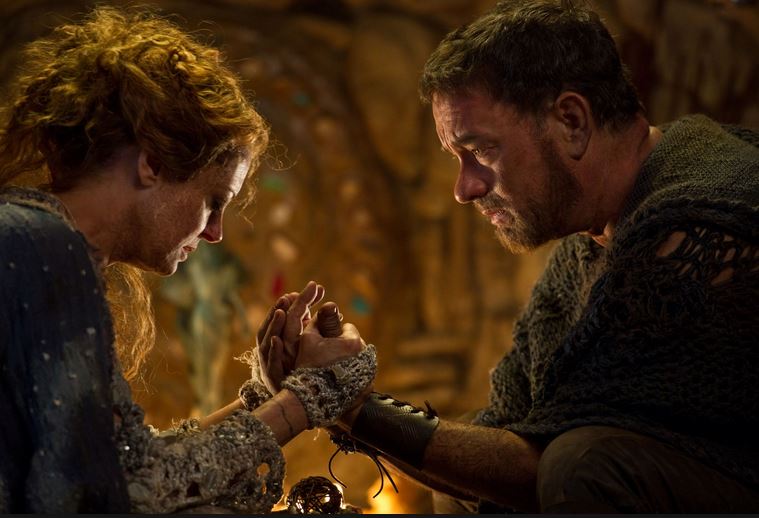
Cloud Atlas“Our lives are not our own. We are bound to others, past and present, and by each crime and every kindness, we birth our future.”

~~David Mitchell, Cloud Atlas~~

—————————————————————————————————————————————

Several days ago, I read of a friend passing in December of 2012. Johnny lived unknown to most.  Yet, as a paraplegic, he was a remarkable man. I remember his laughter, love of politics, his guitar music and his smile. He is so much more the man I ever could become.

If one held his hand, he would instantly bond. I cannot explain, but he had something special. He was an instant friend and whenever I was in Southern Illinois one would seek to find him time and again.

I restlessly thought of Johnny these past days.  My unease and restlessness was self-created. I traveled near and far. “Ah, too busy,” I would say. “There will be another day.” I convinced myself with lovely phrased internal deceits until the one I miss becomes so deeply missed.  My very angst displays the many life lessons remaining to learn.

In watching the movie “Cloud Atlas,” I found some peace. In essence, Cloud Atlas is about the world you see and those you don’t. Six interrelated and interwoven stories span different time periods. But Cloud Atlas’s riveting story lines and nonstop action veil weighty lessons about bigotry, oppression and resistance. All things are interconnected.

For the true Buddhist, everything is interconnected. The crux of our own individual story is that every action has a reaction. Maybe our role changes throughout life. Maybe we learn one lesson at this moment while learning another more poignant time changing experience another. Does this sip of whiskey that currently nips my lips impact my life now as much as it does later?  Can we carry love and hatred forward at the time our death? And more importantly, does one believe all living creatures experiencing awareness deserve an awakened life, either now or forever? Will I connect with those whom I’ve lost and loved somewhere between here and heaven? Will I remember Johnny for all his strength and love of life?

In truth, to condense such a wonderful man into a homily of words seems next to impossible. Yes I will remember Johnny. I will remember his life, and want to see him again, again and again.

So Johnny, in the words of David Mitchell:

“I believe there is a another world waiting for us. A better world. And I’ll be waiting for you there”

The Butterfly Effect, coined by Edward Lorenz, is derived from the theoretical example of a hurricane’s formation being contingent on whether or not a distant butterfly had flapped its wings. In theory, the butterfly effect occurs when a small change at one place has a significant impact on another condition.  In it’s rough form, the Muslim denigration titled, ‘Innocence of Muslims,’ serves as a primary example of Mr. Lorenz’s theory.

Throughout the years of American history, many have chosen to blame others for our own words and deeds, as if our own perpetuity can be so easily absolved.  Still, the very name of ‘religion’ itself has been scourged and skewered by Christians, Muslims, Buddhists, Monks and many others alike. The following summary is a brief reflection on intolerance and killing performed in the name of religion:

    1.  Buddhist Murders in Burma
    2.  Thuggee Murders
    3.  Mountain Meadows Massacre
    4.  The Inquisitions
    5.  Salem Witch Hunts
    6.  Roman Persecutions
    7.  Aztec Human Sacrifice
    8.  Islamic Jihads
    9.  The Crusades

In looking at our own human history, it is clear each of us can either be a fulcrum for good or a fulcrum for evil; that each of us, can at times, be not only the master of our destiny, but the master of another as well. Individually, each of us holds a key of love and a key of hate.

U.S. law enforcement claimed a Mr. Nakoula Basseley Nakoula is behind the anti-Muslim film being blamed for mob attacks in Egypt, Libya and Yemen. While the pathetic and ill-conceived movie ‘Innocence of Muslims’ was filmed during August of 2011, I am pretty positive that neither Nakoula Basseley Nakoula, the film’s actors nor Ambassador Christopher Stevens and embassy staff knew just how tradgically impactful the film would become. I find it ironic that Mr. Stevens’ who’s spent much of his adult life fighting bigotry, would ultimately be propelled toward death by a bigot in his own country. In the end, those who stormed American Embassies and killed Ambassador Stevens probably never saw the film.

As a Buddhist, we must continue to remember “Ahimsa,” meaning do no harm. Live in love and generosity. Do not respond to bigotry by hate. Rather reach deep into your hearts, find the refreshing waters of love and find another way.  We as a nation cannot control the actions of every bigot who must for some unknown reason find it necessary to spew forth their filth unto the world. But it is important to note that such actions, even how our own personal actions, can have such far-reaching consequences.

By Muslim standards, in some irrational way, Mohammed may have been redeemed. From a personal perspective, a producer will probably be sued or returned to prison, the actors vilified and the families of all embassy staff will mourn. Still it is our humanity that cries from the depth of pain.  It is we, “… the poor in spirit” who will suffer.” It’s us, who once again have to force Christ to say, “Father forgive them, for they know not what they do.”

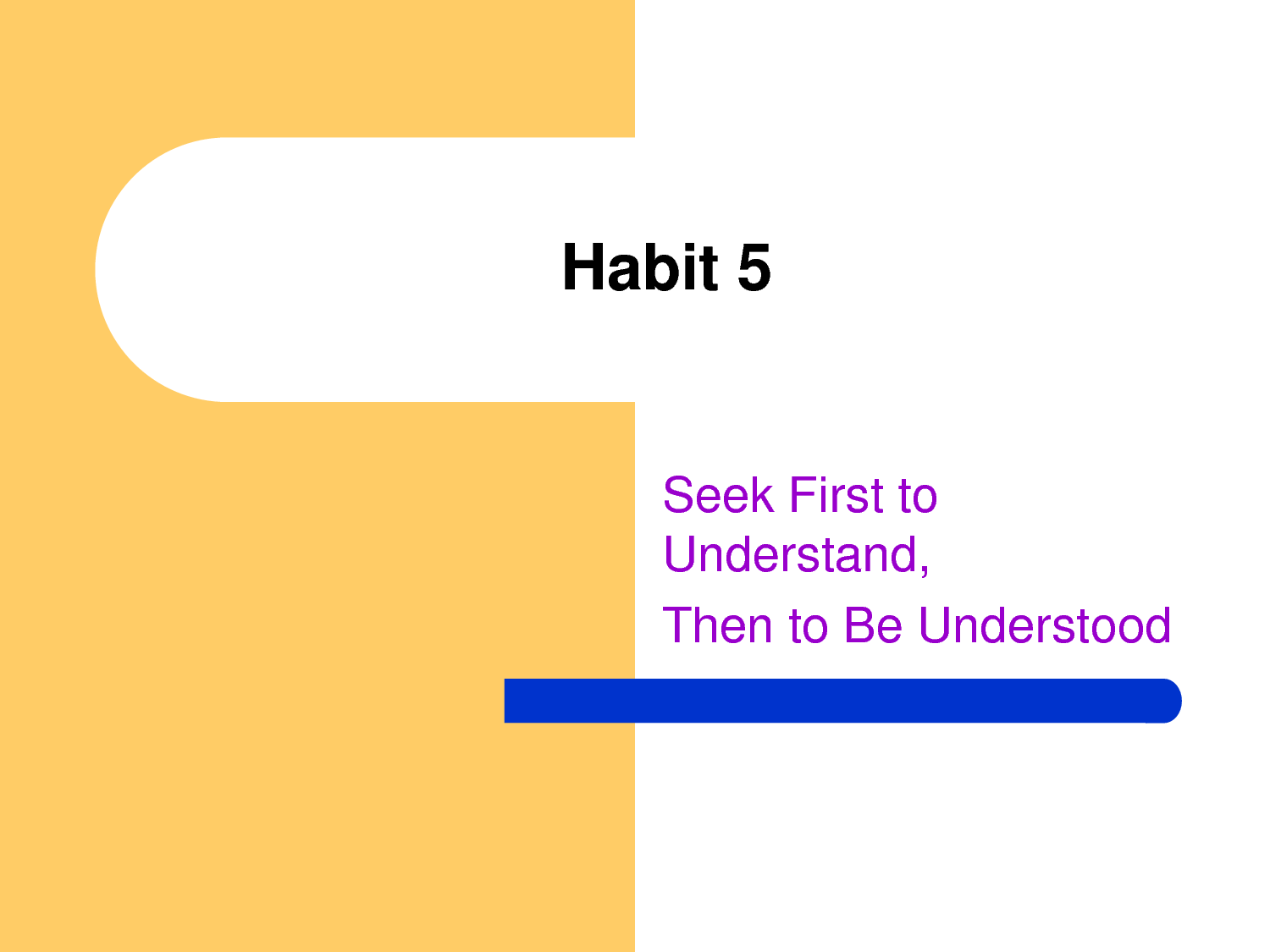
In his book the “7 Habits of Highly Effective People,” The late Stephen Covey wrote of Habit: 5, ‘Seek First to Understand, Then to Be Understood’

Mr. Covey’s argument is as follows:

Communication is the most important skill in life. You spend years learning how to read and write, and years learning how to speak. But what about listening? What training have you had that enables you to listen so you really, deeply understand another human being? Probably none, right?

If you’re like most people, you probably seek first to be understood; you want to get your point across. And in doing so, you may ignore the other person completely, pretend that you’re listening, selectively hear only certain parts of the conversation or attentively focus on only the words being said, but miss the meaning entirely.”

Our words have to be extraordinary important.  They define the person and our followers. In life, we need to hear, we must want to speak, we want to communicate, and God wants us to be part of His society. So true communication is urgent, for each of us has been in our own personal prison far too long.

God commands us to be open and pleads that the listener be open. Think about it … These past two weeks our nation has witnessed two political conventions, with thousands of supporters. Yet we have not found one person whose heart might have been changed by what was heard. After spending all that money and all those hours, we tell ourselves, “Yeah…we were right all along.”  And follow that with, “Yeah…they’ve been wrong all along.”

People who are closed-minded become annoying and downright boring. We appear smart, but are notably dumb. As F. Scott Fitzgerald wrote, “High intelligence is to hold two opposing ideas at the same time.”  We, as a nation have yet to master that.

As the year rolls on, each of us has less and less of an opportunity to be changed by someone else. Am I unwilling to be changed by the experience of someone else? If so, then I do not hold true to my faith. I am not open to God’s spirit working in that person. For the first duty of love is to listen. Not because I will necessarily agree, but if I am not open to listen, then I am not open to being changed … by you. Love is being vulnerable … to you.

We are called to be in relationship to those different from us. And it takes courage in listening to others so different, so compelling in their own beliefs. Who are these people? How do they think and what do they feel. Who do I need to be open to that thought? To whom am I willing to change? Who’s perspective am I unwilling to see?  Who should hear this message? Who should hear my message? Is my message right?

In Buddhism, how we communicate is an important part of our practice. Buddhism has precepts that provide a condensed form of ethical practice, and communication is featured as the fourth precept:

Aware of suffering caused by the inability to listen to others and unmindful speech, I vow to cultivate deep listening and loving speech in order to bring joy and happiness to others and relieve others of their suffering. Knowing that words can create happiness or bring suffering, I vow to learn to speak truthfully, with words that inspire self-confidence, joy and hope.”

As my life nears its end, I want each of to live in one another.

Where There is Love, There is Hope

At 18, I left the comfort of my home and headed to west. I did not realize that by joining the military the westward gales would deposit me in Asia. Once there, I drifted hard looking for the relationships and comfort reminding me of home: a few good friends, hearty laughter with the few critical conversations that dominated the late 70’s and early 80’s.

While I looked hard, my attempts yielded little reward. The Officer’s Club, Airman’s Club, local Bible studies at the Presbyterian Church, sporadic luau’s brought me no closer to elusive dreams. Why? Why couldn’t I find the peace and love so often heard in the stories of old?  Why couldn’t I find my own Snow White, be the Spock to my own Captain Kirk or the Andy and Red (The Shawshank Redemption) in later years?

In truth, what tended to come my way was filled by the “near enemy” of love, i.e., conditional love. I was simply too young to understand the depth and maturity required for such deep friendships.  The agape form of love Christ discussed is unconditional and requires both courage and acceptance. I was never prepared, either by my school or parents, for this level of commitment. Thus, the ‘love’ of my world view comprised of old television shows, various long-forgotten motivational speakers of the 90’s and overly rosy picturesque themes painted by guest artists upon my canvas. Never once did I stop to question the drawings presented. Instead, everything was absorbed like a sponge, but never once rinsed.

The important Buddhist teacher and philosopher Nagarjuna said,

“If there is love, there is hope that one may have real families, real brotherhood, real equanimity, real peace. If the love within your mind is lost and you see other beings as enemies, then no matter how much knowledge or education or material comfort you have, only suffering and confusion will ensue.”

Sitting upon the shore, I look unto the sunset and acknowledge my waning years. Into to sun’s last hue, I revisit all the opportunities of agape love God granted me. “Oh Lord,” sighing, “where did they all go?”

Another minute passes, “No need to answer Lord. I know.” Each was lost to time, to myself, to frugal dreams.

And now, there … in the dance between twilight and night, I see her once again. Standing in the prime of life. She should have been my family, my wife and lover.  But more than that, she remains beautiful. And for a moment, I want in.

But by living only in yourself, God allocates you only ‘moments.’  And these moments are not, as Nagarjuna would say, real.

I am haunted by what could have been real.