 The widening gap between executive and worker pay came into sharp relief earlier this week when Wal-Mart announced that CEO Michael Duke made $20.7 million in 2012, a 14 percent pay increase from the prior year. It would take a full-time hourly Wal-Mart employee, who earns $12.67 per hour according to the company’s website, more than 785 years to earn Duke’s annual salary. That’s up by about 100 years from Duke’s 2011 pay package of $18.1 million. This calculation is probably on the low side, as it assumes a Wal-Mart employee works 40 hours a week, 52 weeks a year, never takes vacation and doesn’t pay taxes.
Other out of whack CEO compensation:
- Apple CEO Tim Cook’s total compensation is $368 million. It would take over 6000 Apple employees combined to match that salary.
- Target’s CEO, Gregg Steinhafel earned a paltry $19 million. It would take over 600 Target employees to match that salary. The typical Target employee made $29,000.
- Indra Nooyi of Pepsi earned $14.1 million while Micheal Dell earned 4.3 million. The CEO of Verizon earned $23 million while AT&T’s guru earned $18.7 million.
Do you think any of the above named CEO’s is intellectually better than an average employee? Not really. Having financial woes takes up so much attention, they often make poor decisions.
“When you are very, very focused on what you don’t have enough of, you do all you can do to get more of it, at the expense of other stuff,” says Eldar Shafir of Princeton University.
When people don’t have enough money, they’re so focused on ways to get more that they don’t make good choices. In real life situations, poorer individuals make more bad decisions when faced with a financial crunch – they pawn more items – a truly awful financial decision – and were twice as likely to borrow money.
Poorer individuals use less preventive health care, fail to adhere to drug regimens, are tardier and less likely to keep appointments, are less productive workers, less attentive parents, and worse managers of their finances. For instance, Wal-Mart, the nation’s largest private employer, recently informed employees that all future part-time employees who work less than 24 hours weekly will no longer qualify for any of the company’s health insurance plans. In addition, any new employees who average 24 hours to 33 hours a week will no longer be able to include a spouse as part of their health care plan, although children can still be covered.
Living wages are important because when you make $25,000 a year, one typically spends almost all income on food and shelter. Those on minimum wage have no insurance. Thus a major hospital bill places a family deep in debt.
From a Buddhist perspective, the web of economic exploitation has become very complex. Having traveled to so many countries, when I’ve looked beneath the surface of any other religious war, you will always find a hidden agenda of economic advantage behind the conflict. It is only with the admixture of other elements that turns the conflict into a war. If it wasn’t for economic difficulties, in spite of differences of belief, why should different groups want to interrupt ‘business as usual’?
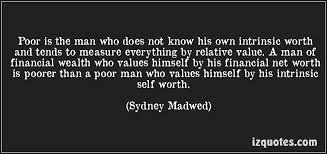
One last thought. I question how much we really “value” our employees when we can’t even agree that people have a right to health care or a living wage. If individuals have “intrinsic worth,” then many current business leaders have an odd way of showing it. Seems to me what we Americans value is not individualism, but money. Individuals are valued only as much as they contribute to the Gross National Product.
If we want to stop poverty, we must reverse this reverence of money.