Category: Religion


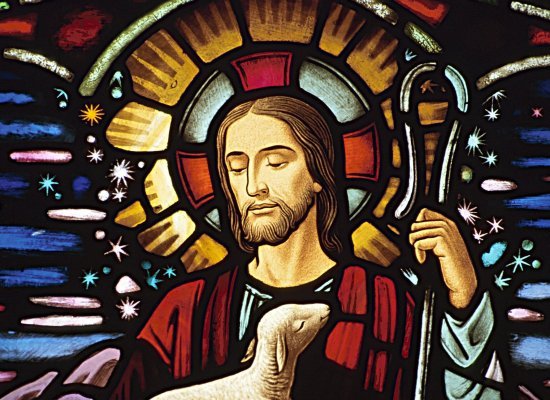
Christ CompassionSitting without power in a northern Vermont/New York town, a few of us huddle against the hotel’s fireplace and embrace the radiant heat. And thus, another Christmas Eve stands firm at my door. Here in the woods, there is no Santa, no ghost of Christmas past and even Marley has been placed upon the back shelf of many a mind.

Still, if I had to explain what Christmas is all about, I would summarize by using the word “love” or “compassion.” Certainly, we can see Christ’s compassion. He had many faces; some fierce; some wrathful; some tender; some wise. Dalai Lama once said, “Love and compassion are necessities. Thus, without them, humanity cannot survive.

Without becoming religious, I have been lucky to see Christ everywhere. There are so many whose hands and eyes have touched me. And in an unceasingly unending river of love, they continue to embrace my soul today. They touched me when I was partially paralyzed after a military accident some 30 years ago. And because of my caregiver’s strength, her strength became the kind of mudra and imprimatur that now guides my life. She could clearly see into the nature of my suffering. And she stood strong, recognized that I’m wasn’t separate from her and transformed my suffering.

But Christ’s compassion has another component: the seeds of compassion require watering. Several weeks ago, I attended a healthcare fair in East St. Louis, Illinois. Anyone traveling through East St. Louis would say that this is the land God forgot. The seeds of their own compassion had rarely been watered. But the conditions for compassion must be activated, they have to be aroused. Each us can activate an amazing abundant amount of compassion throughout our life, but we choose otherwise. Why?

Sometimes we hinder love through our own self-pity, our higher-than-thou moral outrage, or simple fear. We look unto the world and see a world paralyzed by fear. And in that paralysis, our capacity for compassion also becomes paralyzed. Instead, we harbor a “scarcity mentality” and shrivel in the face of trial. Thus, compassion drains us.

But I promise you the type of love and compassion Christ delivered can be truly enlivening.  We can open the world and have an undefended heart. The archetype of this in Buddhism is Avalokiteshvara, Kuan-Yin, she who perceives the cries of suffering in the world. We can stand with 1,000,000 others, hand-in-hand, and embrace the powerful instrument of love.

This Christmas, I ask you to come out of the cave. Be compassionate, remove one another’s problems and transform yourself into the Buddha of love, into the Christ of compassion.

We can be powerful partners of life – we can be compassionate fathers, with sons who are loved, with daughters who are honored, with mothers who are proud. We can embrace the plumber, the road builder, the caregivers, the doctors, the lawyers, the president (faults and all), and with all beings.

This Christmas, sit in the lotus sea of love and actualize the potential for all mankind. That’s what Christ accomplished. And we can as well.

Have a wonderful and blessed holiday.

Take Your Pick and Choose Wisely

Screen Shot 2013-11-11 at 7.03.23 PMIn the wake of Hurricane Sandy, I assisted several hospitals in restoring their information technology resources.  In the midst of all the mental stress, anguish and pain inflicted, I look at those who passed and ponder the most basic, yet futile, question: “Why?

In October 2012, a New York Times story detailed about 39 people who died in the storm. The following is an excerpt:

  • A Manhattan woman whose only sin appeared to walking her dog and was killed by a falling tree.
  • There was the woman whose iniquity was to take a picture of a downed power line. She did not see the puddle in front of her. Her body remained engulfed in fire for half an hour before rescue workers could salvage what was left.
  • A young Jewish couple killed walking a dog in Brooklyn.
  • Two boys killed when they walked just outside their house to briefly peer at the storm.

In true form, all of us have seen we have seen God’s people serving as God’s hands and feet in the aftermath of many natural disasters. The true image of one’s faith can be seen in all who have selflessly reach out, assisting the poor and downtrodden. All of this may be true, but still I query, “Where was God when Typhoon Haiyan struck the Philippines?

Hurricane Katrina survivor and retired pastor William Mackintosh stated “God doesn’t send suffering, he allows it and God enters into suffering and shows us how to use it.”  Mackintosh believes suffering and disaster allow believers to learn and practice trust in God, as well as provide a chance for people to be heroic and to help others.  From my perspective, while it may be true that evil (e.g. the death, misery) gives us the opportunity to express kindness, concern and generosity, but could not God think of a less cruel way? Is it fair to inflict suffering just so society has the opportunity to serve?

These are nice thoughts, but personally, it’s bullshit. Ask anyone from the Haiti earthquake, the December 26, 2004 Asian Tsunami, the 2011 earthquake off the Pacific coast of Tōhoku or the 2008 earthquake in China’s Sichuan Province about God entering their suffering and seeing if they found a positive way to use it?  Is this what we are to say to the Philippine mother, “God will positively show you how to use the death of your daughter, son and father?

Maybe it’s time to concede to the fact that God is busy. Or as the Philosopher Sam Harris so eloquently quoted after the Tōhoku earthquake, “Either God can do nothing to stop catastrophes like this, or he doesn’t care to, or he doesn’t exist. God is either impotent, evil or imaginary. Take your pick, and choose wisely.”

Why God allows so much suffering is beyond me. Frankly, I don’t really care. I’ve seen too much misery in life, of natural disasters, the inhumanity of mankind and that within myself.  As a Buddhist I do not need evil to be good, to understand what goodness is or to strive to be good. Disasters and God’s strange approach towards His creation can prod me to do good but more often it is the beauty and joy of goodness itself that moves us. It is the Buddha, Christ, God or our faith in humanity and of each other that should inspire us to a higher virtue.

In short, to my friends of faith, if you knew that the above mentioned disasters were going to happen and you had the power to stop it, would you have done so? Undoubtedly most would answer ‘Yes.’ The obvious question that follows from this is, ‘Then why didn’t God?’ How one answers this question will depend on what one’s religion is or whether one has a religion.

As Sam Harris would say, “Take your pick, and choose wisely.”

Community_Soup_Kitchen

When I think of the “Upstate Atheists,” I think of Walter Bristol’s comment, “Economic inequality is one of the most imminent issues facing Western society today. Any progressive movement that chooses to dismiss it is and will be rightfully dismissed themselves.”

In case you haven’t heard, the Upstate Atheists from Spartanburg, South Carolina has worked with Adopt-A-Highway, Habitat for Humanity, and the Generous Garden Project. Recently, the group made plans to volunteer at the Spartanburg Soup Kitchen. The group was rebuffed for their effort, indicating they were not welcome because they are a “place of God.”

That leads to a larger question, “Was the Spartanburg Soup Kitchen rebuke an example of the life and ideas of God?” Obviously not! It’s easy for Christ’s message of goodness and holiness to become an obstacle versus an example of simply being called to the openness and grace of God.  The call to service cannot simply come from only God, there are many across the planet who serve in faith, yet are not aligned to Christ alone. Many are not forced to serve as a duty, yet many find a profound sense of love when giving to the needs of another.  Serving in faith means leading in love. And that’s a large message missed by the Spartanburg Soup Kitchen.

The “Service to Others” movement must address bigger, more prominent social issues. What purpose does serving the poor mean, in and of itself, when the biggest issue of our time remains income inequality? Of all the developed nations, the U.S. has the most unequal distribution of income. In the past decade, 95 percent of all economic gains have gone to the top 1 percent. A mere 400 individuals own one-half of the entire nation’s wealth. Meanwhile, median household income keeps falling, and our poverty levels resemble that of the Great Depression era. In other words, the rich are getting richer, the poor are getting poorer and the middle class is being decimated.

To know our call requires faith. If we are created in love and called to a life of service, then we must understand that the clarity of faith a Christian has can be just as powerful as that of a Buddhist, Atheist, Protestant, Muslim, Jew, etc.  Christians do not own the garage door of faith.

I believe many of the poor see faith and love in those who serve. But Christians, Buddhists, Muslims and Atheists alike must be willing to see the crucified, suffering Christ in all we serve. In other words, Christ’s real message was service in love. And to all who serve, we must see that love in all our brothers and sisters, broken by unemployment and enforced idleness; struggling to feed, clothe and house their children, no job, little income and constant challenges. Those beset by the demons of mental illness, constrained by addiction, or the guilt of lost family members mirror the sufferings of not only Jesus … but of all nations … all faiths … and all who serve.

Are we able to see with the vision of faith? Can each of us, regardless of faith, see the presence of the suffering in everyone? What are you open to see?

Guiding the downtrodden to a seat for a meal takes strength, but no great skill or wisdom. The real weakness is our wasted talent and willful neglect by bickering over whose faith is more righteous.

Kan: By knowing when we truly love, it is never lost. It is only after degolf_sunset-1366x768ath that the depth of the bond is truly felt. And our loved one becomes more a part of us then was possible in life.
KCC: Are we only able to feel this toward those whom we have known and loved a long time?
Kan: Sometimes, a stranger known to us for moments can spark our souls to kinship for eternity.
KCC: How can strangers take on such importance to our souls?
Kan: Because our soul does not keep time. It merely records growth.

~~ Kung Fu~~

The golf driving range is an interesting place to learn the art of love. Swinging golf clubs, hitting practice balls and tuning one’s swing is seldom, if at all, considered a labor of love. When thinking of golf, I often refer to the Buddhist phrase, “sonomama” or simply see things as they are. Whether one has a good score or bad score, you have to accept the result of your game as your own karma. It is what it is and one can’t blame anyone other than yourself.

Life works in much the same way. The Buddhist descriptions of difficulties and sufferings in our lives are just like sand traps and rough greens on the golf course. We try to avoid and escape from these difficulties in our lives. However, we really can’t escape from them. We have to just accept and live with difficulty and suffering as part of our life. We must accept our life as it is.

However, similar to life, when true love finds our life, our ability to avoid and escape obstacles is significantly enhanced.  Truthfully, the love found within the beauty of the golf swing is similar to Buddhism, Christian faith and many other religions. Love is universal and comes from the same source. In 1 Corinthians 13, Paul beautifully illustrates love’s essential qualities’:

Love is patient, love is kind. It does not envy, it does not boast, it is not proud. It does not dishonor others, it is not self-seeking, it is not easily angered, it keeps no record of wrongs … It always protects, always trusts, always hopes, always perseveres.”

If you’re patient, the level of golf and love will increase. If you’re not proud, your level of golf will expand. If you keep a list of no wrongs, your life and love will greatly enhance all whom you touch. If you protect and trust, your life will become fulfilled, both on and off the course.

Most of us try to force love, as if the deep spiritual connection can be fabricated. But if we stop our construction and creation, love becomes significantly easier. And in this acceptance, you will be surprised how many events of life become whole and simplistic.

All living creatures need nourishment. And with love, the body learns to sustain in ways that all may live. We can try to force our way into love, but the results are too restricting. Similarly, the same is true on a golf course. One can try to force our swing, but more often than not, we struggle against nature’s spirit and we fail miserably in our result.

There was a wonderful letter written by the character June Ellis, in The Doctor:

There was a farmer who had a lot of fields, and he kept all of the birds and creatures away from his crops with traps and fences. He was very successful… but he was very lonely. So, one day, he stood in the middle of his fields to welcome the animals. He stayed there from dawn to dusk, with his arms outstretched, calling to them. But, not a single animal came. Not a single creature appeared. They were terrified, you see, of the farmer’s new Scarecrow… just let down your arms, and we’ll all come to you.

People … real love is patient and kind. Stop trying so hard. Let your arms down. Love someone and spark a kinship destined for eternity.

JesusHaving walked though all 50 states and a wealth of countries on this little island “Earth,” I have witnessed many exhilarating, magical and tragic events.  I have seen the Berlin Wall fall, the rise of communication, the Arab Spring, progressive women rights, the speeches of Dr. Martin Luther King, the walk against apartheid, the battle against HIV, the music of Louis Armstrong, the tragedy of September 11th, the tsunamis, earthquakes, the space shuttle. I’ve seen some wonderfully terrific men and women as well: Francis Collins, J. Craig Venter, Nelson Mandela, Richard Stallman, Aung San Suu Kyi, Congresswoman Gabrielle Giffords, Clara Barton, Rosa Parks, Malala Yousafzai, the Clintons, General Powell, Bill Gates and many, many more.

Personally, I’m under no illusion. I am not worthy to sit in the shadow of such great men and women. I have not cured the world of disease. Nor have I solved a nation’s critical problem. I have not invented something that positively impacted anyone, let alone bring water to a village, electricity to the poor, nutrition to the hungry, freedom to the enslaved or hope to the hopeless. Nope …. sorry. I do not count myself in that realm.

But what my travels has revealed is the opportunity to review the collective soul of all whom crossed my path. And in that, many United States leaders and politicians, at some point in time, have crossed my path.  These paths have ranged from the short momentary sight and quick handshake, to an actual conversation of meaning and thought.  I have been lucky to witness the soul and these snippets of time bared unknown quantities of fruit. For some, the soul bursts forth with ideas and thought exchange.

Seriously, these men and women all have faults. But many share at least one solid character trait. Their need became the needs of the many. Each was able to align themselves to the greater good, not so much for themselves, but for the betterment of humanity.  Something inside brought forth an unknown quantity of fruit to which they were willing to share. In splendor and blemish, each willingly gave life to all whom they touched.

In the ongoing battle within Washington these days, I see a darkness. Borrowing from Spock (Star Trek), the needs of the many outweighed the needs of the few. Yet today, it’s as if one party loyalist or another openly defies the world and claims, “The needs of the few outweigh the needs of the many.”  Budget hawks claimed stripping services from the poor were crucial for economic soundness while ultra-conservatives placed a stake in the ground by stating the unborn is their mission. Bishop E.W. Jackson, candidate for Lt. Governor of Virginia repugnantly claimed government programs created more harm to blacks than slavery; and that non-Christians are “engaged in some sort of false religion.” For faith voters, tons of guns remain really good while gays are vile. And yes, religious freedom seems to be always under attack.

For all the “let’s get back to God” symposiums, there are the overlooked: the complete and utter lack of interest in the poor, immigrants, the unemployed, the father and mother working two jobs, the sick, the mentally handicapped, the hungry, the handicapped, those in constant pain, the poor in spirit – yeah, the very people Jesus loved. In an era of big money, big politics and ego, it’s apparent there aren’t enough representatives for many: the meek, the soiled and outcast.  We’ve have been abandoned by the wayside of life’s road.

From a Buddhist perspective, we must acknowledge many nations reflect a kaleidoscope of religious faith and belief. Religion is a sacred engagement, often believed to be a spiritual journey. In some instances a heavenly god may be the center of a religion. In other cases it may be saviors, scriptures and sacraments. In this light, we all are interconnected. And that interconnection swallows us into the collective of “the many.”

When the needs of the few mirror the nation, we become more than just ourselves. We transform from a substandard set of egos to consciousness. Only then can any of us reach for the greater glory within. This is the Christ, the Buddha, the Muslim, the Protestant, the Catholic and Atheist we all want.

Seek the needs of the many, not the needs of the few … or even the one.

How Did You Make It?

thThe Barnes and Noble I currently sit offers little comfort my from the muscle aches and pains I endure.  Literally, some days wrench my life with true exhaustion.  While I am not some fanatic guided by overbearing and miserable thoughts, my wonder of the hereafter often cruise through my brain on such days.  The basic question is similar to those who probably sit around me, “If there is indeed an afterlife, is it really any better? Does the sum of your days condemn one to an afterlife of pain and anguish or does a merciful God await one’s soul near life’s end?”

Would that merciful God appreciate all the deaths from Ireland’s Catholic/Protestant wars, the anguish Catholic Priests caused during sexual scandals, the genocide of Hitler, Rwanda, suicide bombers, fake evangelical television preachers and the like? Would God allow politicians utilizing demagoguery to pervert the very nature of kindness and love a wonderfully filled heaven with incense and mirth? Would God call me, the most vile of humans, to live at all?

Philosopher Samuel Scheffler doesn’t believe in a traditional afterlife — that is, he doesn’t think that a spirit or soul survives the body’s physical death. Profoundly, his thought is that we have a profound effect on those who live beyond us, that many of the things we now regard as worth doing would no longer seem to us worth doing. And by living beyond us, we are ensured for moments, maybe even years, that our spirit lives on.

The Rev. Gabriel Salguero suggests we as people have learned to live together, despite difference and despite our cultural backgrounds. This means that acts performed over the centuries in the name of faith (i.e., God) will become washed away. A right relationship with God here on earth, and also in eternity. So we’re going to see people from across the geographic spectrum, and across the racial/cultural spectrum, and we’ll all be one.

I am not sure if either of those perspectives would comfort any of those whom surround. Most would certainly follow those often chimed words, “Everyone wants to go to heaven – just not today!

Truthfully speaking, here and now, I know exactly where I will end after my days close.  How I know will be set for another writing.  But being Buddhist, I believe what God really wants all of us to do is to develop and invest in the right relationships. For some, that may be through the Christian faith. For others Muslim. And others, leading a wonderfully beautiful atheist life. I believe any right relationship established here lasts throughout eternity.

I am befuddled by those who despise such an earth as elitism or socialism. Yet, almost to a word, that’s almost how they perceive God’s view of heaven.

But being a Buddhist, what if we built heaven now? What if we built our heaven here? What if we built a world where there’s no concept of power or money. The hungry eat, the thirsty drink, no iPhone APP, nothing to kill or hate, no one to rape or abuse. No one to politicize. No wars. No unnecessary death.  All receive healthcare. All are cared?

Buddhists believe that there is a deeper, more complete understanding of reality than the one we think of and participate in every day. Having partially seen part of the next world, I can say our bodies may die, but our minds will live. Like a river running through several countries, we continually pass through one boundary into another. That river never changes.

I suggest we life heaven now.  As Kevin Spacey quotes in the movie K-Pax:

Even your Buddha and your Christ had quite a different vision, but nobody’s paid much attention to them, not even the Buddhists or the Christians. You humans. Sometimes its hard to imagine how you’ve made it this far.”

How did you make it this far?

becktel_s640x427Commentator Bob Beckel was saber-rattling several days ago when he made anti-Muslim comments on Fox’s “The Five.”  The panel discussed the attack by Islamic militants who killed dozens in Kenya’s Westgate Mall. During the show, Beckel declared Islam is “not the religion of peace” and Muslims need to “stand up and say something.” Further quoting:

I will repeat what I said before: No Muslim students coming here with visas. No more mosques being built here until you stand up and denounce what’s happened in the name of your prophet … The point is, that the time has come for Muslims in this country and other people in the world to stand up and be counted, and if you can’t, you’re cowards.”

After reflecting for several days, let’s expand upon Beckel’s statements. Contextually, I believe all religions should “… stand and denounce what’s happened in the name of your religion.” Here are my thoughts:

  • The disgraced mega pastor Jack Schaap, from the First Baptist Church in Hammond, Indiana, had kissed a minor during counseling, claimed Christ wanted the two to be together and had sex with the teen in his office.
  • Pastor Eddie Long settled various sexual impropriety lawsuits out-of-court.  Of course terms were not disclosed.
  • Richmond Outreach Center founding pastor Geronimo “Pastor G” Aguilar resigned with three other pastors from the church amid an explosive sex scandal on June 5th. All resignations stemmed from Pastor G’s extradition to Texas in late May to face seven felony charges, including aggravated sexual assault of two sisters under the age of 14.
  • Prosecutors dropped a simple battery charge against Creflo Dollar, pastor of mega church in Atlanta, Georgia, after completing an anger-management program for being accused of choking and hitting his teenage daughter.
  • Robert Schuler and family basically financially crashed the Crystal Cathedral. Allegations of the founding family’s misappropriation of funds exacerbated in $50 million debt, causing the church’s bankruptcy.
  • Marcus Lamb, a televangelist and founder of the Daystar television network, the Rev. Marcus Lamb, confessed he cheated on his wife Joni Lamb, who also led the network, in front of his television audience in 2010, saying he was coming clean in the face of a $7.5 million extortion attempt.
  • In 1951, Dr. Hobart Freeman survived a heart attack at age 31. Freeman claimed, “… when genuine faith is present, it alone will be sufficient [to] take the place of medicines and other aids.” In his congregation, diabetics stopped taking insulin and mothers eschewed pre-and post-natal care. Prayer was used to try to bring loved ones back from the dead. Dead babies were laid next to live ones, in hopes the live babies would transmit life to the dead children. Eventually, Freeman was arrested.
  • Catholic sex scandals – Sexual abuse by Catholic Priests were widespread, occurring in cities across the country, including Boston, Chicago, Honolulu, Los Angeles, Orange County, Palm Beach, Philadelphia and Portland, as well as in dioceses across Europe.
  • The three companies that insure a majority of Protestant churches in America say they typically receive upward of 260 reports each year of young people under 18 being sexually abused by clergy, church staff, volunteers or congregation members. The figures offer a glimpse into what has long been an extremely difficult phenomenon to pin down — the frequency of sex abuse in Protestant congregations.

In reviewing the above stories, one can easily find several problems with Beckel’s approach. First, if we require denunciation of one’s religion, then we must denounce our faith as well. Christians are no more likely to stand up against their own as Buddhists, Muslims, Protestants, and Catholics or any other religion. In the case of Catholic Priests, it took years. Americans pretty much suck at that. However, we must not neglect to state American Muslims did denounce this Westgate Mall tragedy, as did Muslim leaders in Kenya. Secondly, commentators like Beckel tend to attribute the actions of one person(s) to an entire faith. Can an entire faith of Catholics be deemed bad because of some Priests? Aren’t we morally indignant if we judge all Muslims similarly? Third, Kenya’s Westgate Mall terrorists were clear the attack was revenge for the Kenyan government sending troops to fight them in Somalia.

All religions have their dark secrets. And in that sense, all religions are intertwined. When God entrusts his Church to men and women, that trust can be either be a blessing or curse. The vessels of God’s grace can misfire, become flawed, and fall short of the grace He intended. Truth told, for every scandal in a megachurch and for every Jihadist nutcase who commits a terrorist act, I know of countless others who operate in integrity and hold themselves accountable. That’s the virtue of seeing someone from a position of love versus stereotypes.

Don’t let the few cause you to place all in the same category.

Double Stupid

pastor-andrew-hamblin-of-tabernacle-church-of-god-in-lafollette-tenn-preaches-while-holding-a-snake-above-headCable television is filled with stupid shows, from The Kardashians, truTV’s World’s Dumbest …, Bill and Giuliani, Housewives of Beverly Hills, Atlanta or whatever city, Bad Girls and a host of others. Accordingly, someone at the National Geographic Channel decided “stupid” was good TV fodder, so they started airing “Snake Salvation,” a reality based television show oozing in “double stupid.”

The promo reads accordingly,In the hills of Appalachia, Pentecostal pastors Jamie Coots and Andrew Hamblin struggle to keep a 100-year-old tradition alive: the practice of handling deadly snakes in church.” Snake Salvation pastors are one homily away from being another Darwin Award winner, a website recognizing individuals contributing to human evolution by self-selecting themselves out of the gene pool via death or sterilization via their own (unnecessarily foolish) actions.

The series follows Pentecostal Pastors Andrew Hamblin of Tabernacle Church of God in LaFollette, Tenn., and Jamie Coots of Full Gospel Tabernacle in Jesus Name church of Middlesboro, Kentucky. Coots has been a long-time mentor to Hamblin and inspired him to start his own snake-handling congregation. (Note to self: be sure to always get a good mentor.)

From what I understand, these whack jobs believe God commands them to dance around with Diamondback Rattlers and other assorted venomous snakes, following the Biblical teaching of Mark 16:18:

And these signs shall follow them that believe; in my name shall they cast out devils; they shall speak with new tongues; They shall take up serpents; and if they drink any deadly thing, it shall not hurt them; they shall lay hands on the sick, and they shall recover.”

I believe these types of pastors are missing, that in theory, we are not to put the Lord to the test (Exodus 17:2; Matthew 4:7). Yeah. I know, I know. The human race seems to challenge that concept on a daily basis. However … just as Jesus refused to jump off the pinnacle of the temple, so we are to not intentionally put ourselves in situations requiring God’s miraculous intervention. First Corinthians 10:9, while not speaking directly of snake handling in churches, says it best: “We should not test the Lord, as some of them did — and were killed by snakes.”

The Buddha never placed unconditional demands on anyone’s faith. And for anyone from a culture where the dominant religions do place such demands on one’s faith, it’s simply wrong. We read the Buddha’s instructions, which advises testing things for oneself and seeing it as an invitation to believe or not.

One does not have to go looking for a snake in an effort to prove their faith. I don’t believe that’s what God’s about. Live your faith by helping the unemployed get employed, feed the hungry, help the homeless, help a child study for a difficult math test, love your wife and honor your employer and coworkers.

For snake based faiths, pastors and members alike, your actions are deeply rooted in ignorance.

SinelessLast week, Bishop Thomas Tobin of Providence, Rhode Island, wrote he was “a little bit disappointed” that Francis hadn’t addressed abortion since being elected.  Pope Francis acknowledged that he had been “reprimanded,” but responded:

We cannot insist only on issues related to abortion, gay marriage and the use of contraceptive methods. This is not possible,” he said. “The teaching of the church, for that matter, is clear and I am a son of the church but it is not necessary to talk about these issues all the time.”

To me, the more important statement made occurred several months ago.

A person once asked me, in a provocative manner, if I approved of homosexuality. I replied with another question: ‘Tell me: when God looks at a gay person, does he endorse the existence of this person with love, or reject and condemn this person?

Having been personally condemned by the Catholic Church, I concur with Pope Francis that the church’s pastoral ministry cannot be insistently obsessed with a disjointed multitude of doctrines. The church must find a new balance; otherwise even the moral edifice of the church is likely to crumble, losing the freshness and fragrance of the Gospel.  The Catholic church should be thinking we are the home of all, not just small group of selected people.

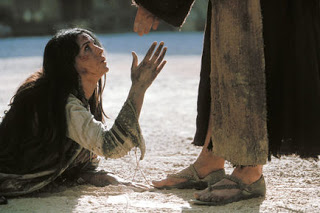
Someone recently queried my thoughts of homosexuality and abortion. To dodge the question, I carefully stated neither is a true, ‘black or white,’ ‘yes or no’ answer. But in truth, I genuinely sail my ship to a more holistic path.  So when I look at someone who may have had an abortion or someone who believes that gay and lesbian couples should have similar rights, I often think of John 8:7, “…let he who is sinless cast the first stone.”

Like Jesus, I won’t condemn a woman or homosexual relationship. It’s not because I am some free thinking whacked out liberal nor is it because I condone either. The real truth of what I see is that the men and women who make such black or white arguments are hypocrites. And hypocrites use the Bible to drive home hatred, bias and ignorance. As such, Americas’ churches are filled with such hatred. We believe more in hatred and guns than love and integrity. Don’t believe me? Then research Scott Lively, the Westboro Baptist Church or Terry Jones, who was recently arrested with thousands of kerosene-soaked copies of the Muslim holy book in his possession.

The most important goal for Buddhism is to awaken, to realize one’s true nature, putting an end to suffering. Pope Francis has thrown an olive branch of sorts by making it abundantly clear that we need all members of society. Not because there is some magic in numbers or the loss of time and dignity spent fighting personally partisan issues.  But more so because all of us are interconnected. We always have been and always will.

Martin-Luther-King-I-have-a-dreamIn truth, it’s awfully hard for me to connect with Dr. Martin Luther King. After all, I was only three years old at the time of his “I Have a Dream” speech.  But because I have several African-American friends, I can understand some level of racism by simply witnessing what they’ve endured.

Today, being a fifty-three year old Buddhist, I remember reading Thich Nhat Hanh’s perspective of Dr. Martin Luther King:

The moment I met Martin Luther King, Jr., I knew I was in the presence of a holy person.  Not just his good work, but his very being was a source of great inspiration for me … On the altar in my hermitage in France are images of Buddha and Jesus, and every time I light incense, I touch both of them as my spiritual ancestors …  When you touch someone who authentically represents a tradition, you not only touch his or her tradition, you also touch your own . . . When those who represent a spiritual tradition embody the essence of their tradition, just the way they walk, sit, and smile speaks volumes about the tradition.” 

There have been times in my life when I have offended all sides of one issue or another. I have gone beyond meditation to campaign for internal dialogue of peace between colleagues and clients. I have walked in the aftermath of tsunamis,’ earthquakes, tornadoes and other natural disasters.  And I wish I could say I always lived and breathed in the core principles of Buddhism, but I have yet to live each and every moment in complete awareness of the present moment and the abandonment of worldly thoughts.

By walking across this small planet; having encountered and losing the greatest live of my life, I reflected on Martin Luther King’s humble and devout lifestyle. Of all I’ve read, I know Dr. King struggled with his role for many years. Many of his friends were killed. Yet they live on with him. Of course the words and choices were Martin’s. Yet his very words and life remain among us in many forms. His very being, as well as many unknown martyrs, continue with us today. Their spirits live because we live.

Still, my greatest fear is that our nation is becoming a nation of silent onlookers. In the face of hate, we shrug. In the face of brutality, we pass by. And in the face of mass murder, we simply accept. We must not remain silent. America is not merely black American, but all of America.

With that, I end with King’s words:

It really boils down to this: that all life is interrelated. We are all caught in an inescapable network of mutuality, tied together into a single garment of destiny. Whatever affects one directly, affects all indirectly. We are made to live together because of the interrelated structure of reality . . . Before you finish eating breakfast in the morning; you’ve depended on more than half the world. This is the way our universe is structured; this is its interrelated quality. We aren’t going to have peace on Earth until we recognize the basic fact of the interrelated structure of all reality.

Dr. Martin Luther King was very Christian, very Buddhist. Why can’t we all?